 High Visibility Clothes
 EN
EN
Why Should You Avoid Dyeing a Class 3 Hi-Vis Parka?
Understanding the important role a class 3 hi vis parka plays safety for people on construction sites, electrical sites, and for people on road maintenance, is crucial. The bright color and reflective features help workers avoid moving vehicles and protective workers from heavy machinery. Some workers want to change the color of a class 3 hi vis parka so it matches other gear. This is a risky behavior. This blog outlines the reasons for never dyeing a class 3 hi vis parka to explain how it compromises the safety role the class 3 hi vis parka is meant to perform.
Dyeing Will Ruin the Visible Quality of the Class 3 Hi-Vis Parka
A Class 3 Hi-Vis Parka’s most important characteristic is visibility. the bright base color is usually neon yellow, orange, or green. These colors stand out in most work environments and even in low light situations. If you dye a Class 3 Hi-Vis Parka a different color, you alter and cover the bright base of the fabric, and therefore, the visibility. Even if you choose a light color, the dye will not uniformly cover the neon bright fabric and will leave patchy areas that are less visible. The Class 3 Hi-Vis Parka can also lose visibility and become dull in the fabric. Workers who use the Class 3 Hi-Vis Parka can put themselves in danger if it loses visibility.
Dye Chemicals Compromise the Reflective Elements of the Class 3 Hi-Vis Parka
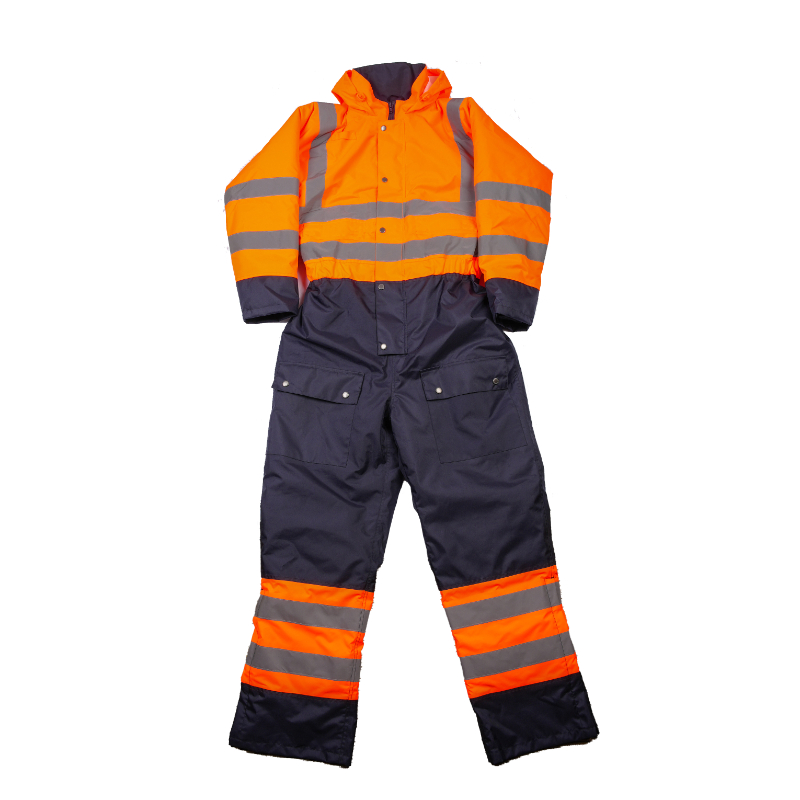
A Class 3 Hi-Vis Parka is more than just brightly colored polyester fabric. The outer layer of a Class 3 Hi-Vis Parka is equipped with reflective strips or patches, specifically designed to reflect beams of light. This ensures that a worker is visible during nighttime, fog, or heavy rain. The reflective strips or patches are incontestably a part of the Class 3 Hi-Vis. Unlike most polyester fabric, the reflective strips are made of materials that are light, smooth, and reflect light brilliantly. During the dyeing process, the fabric is typically soaked in dye solutions. The dye soaking process can easily seep into the reflective strips and the dye chemicals can easily ruin the reflective strips ability to reflect light. Masking the reflective strips while dyeing the fabric may help a little, but splashing dye will easily ruin the reflections strips and patches. A Class 3 Hi-Vis Parka with no properly working reflective elements will not provide the appropriate coverage in low light.
Dyeing Options Risk the Quality and Safety Features of Fabrics
Dyeing Class 3 hi vis parka fabrics can be and often is deconstructed to meet strict safe durability standards, and to also meet the standards of rough weather, resistance to flame in some cases, and other weather conditions. Deconstructing poorly can cause attention to be detoured to the integrity of the protective wear. Class 3 hi vis parkas also often get over-treated with dyes that can potentially cause the parkas to become weaker and more vulnerable to tearing. In other instances, borderline tacky garments can be over-treated with dyes that can easily be used to destroy the wear's integral coatings that are designed to repel downward moisture. Consider a stacked parka hedge. If the class 3 hi vis parka is also designed to be flame resistant, the dye can strip the parka of resistant coatings, which are crucially designed to be safe and protective. Reducing the lifeline of a class 3 hi vis parka also reduces the flame in which the wearer is exposed of, which can oftentimes serve to be protective.
Dyeing Violates Safety Standards and Regulations
Class 3 hi vis parkas comply with safety standards like ANSI/ISEA 107 and EN ISO 20471. These regulations lay down specifications for the brightness and safety of colors, the strength of the fabric, performance of the reflective materials, and overall fabric strength. Dyeing a class 3 hi vis parka changes the garment from its original certified form, which constitutes a breach of these regulations. Certified class 3 hi vis parkas are mandatory for workers under most safety regulations, a dyed parka may not meet the compliance requirements. Consequently, donning a dyed parka may lead to workplace safety violations, and potentially, disciplinary measures. Most dangerously, in the case of an incident, insurance might be voided if a worker was not wearing a certified, unblemished class 3 hi vis parka.
Alternative Solutions Instead of Dyeing a Class 3 Hi-Vis Parka
In the case of your class 3 hi-vis parka, dyeing the garment to alter the color is simply not the solution, as there are other safer alternatives. The first of these alternatives is checking with the manufacturer to see if they supply the class 3 hi-vis parka in other approved high-visibility colors. Many suppliers provide multiple high-visibility neon options- safely offering some alternatives. If personalization is really warranted, consider the approved add-ons like safety vests worn over the class 3 hi-vis parka (without covering the reflective parts) or add name tags in a non-intrusive area. For workplaces with strict color policies, discuss with your manager about obtaining class 3 hi-vis parkas that fulfill the color code and safety regulations. A class 3 hi-vis parka maintains your safety, thus anything that diminishes that must not be attempted.

 REQUEST AN ESTIMATE
 Home
Home