
Coverall
Advantages
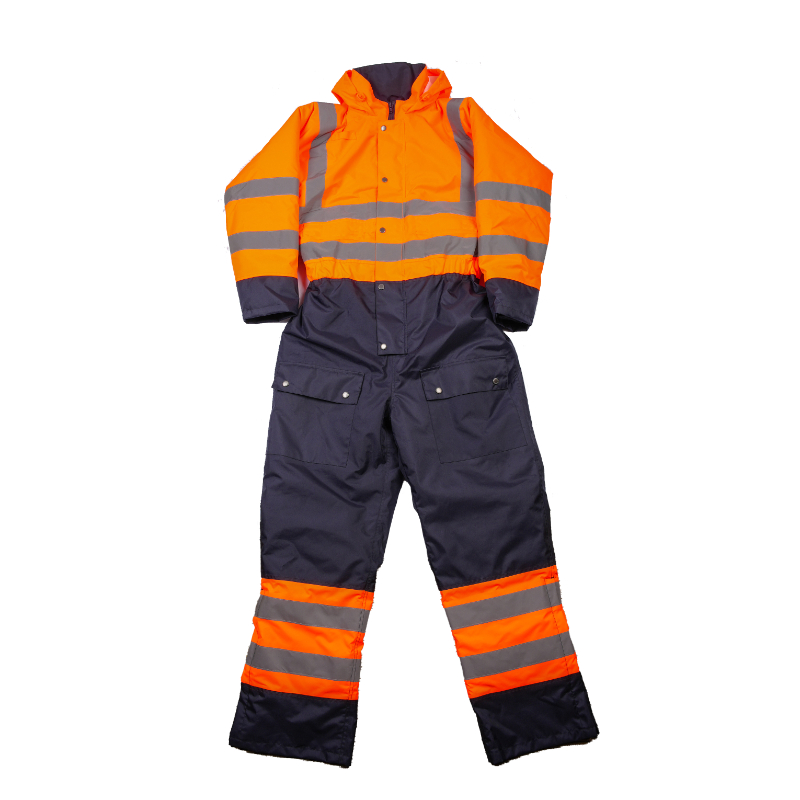
Our high visibility coverall is a comprehensive safety solution for high-risk jobs, with four core advantages that deliver full-body protection, visibility, and practicality. The first and most critical advantage is **360° all-around visibility**—unlike separate safety tops and bottoms that leave gaps in coverage, this high visibility coverall features continuous fluorescent panels (neon orange or yellow) across the front, back, shoulders, arms, and legs. It’s also equipped with wide, heat-bonded reflective strips that wrap around the torso, sleeves, and thighs, ensuring workers are visible from every angle—whether viewed head-on, from the side, or behind. This design eliminates blind spots that often lead to accidents in busy sites, making the high visibility coverall essential for jobs where workers are surrounded by machinery, vehicles, or moving teams.
Second, the high visibility coverall provides **all-over hazard protection** for the entire body. High-risk workplaces like construction zones or industrial sites expose workers to scrapes, splatters (of chemicals, oil, or paint), and flying debris— and this coverall acts as a barrier. It’s made from a heavy-duty, abrasion-resistant polyester blend that resists tears from sharp edges (like metal beams or tools) and repels liquid splatters, keeping underclothes clean and skin protected. The coverall also has sealed cuffs and a full-zip front with a storm flap, preventing debris from getting inside sleeves or the torso. Unlike separate safety gear that leaves gaps (e.g., between a jacket and pants), the high visibility coverall offers unbroken protection, reducing the risk of cuts, stains, or irritation.
Third, this high visibility coverall ensures **strict compliance with global safety standards**—a non-negotiable for regulated industries like construction, industrial manufacturing, and emergency response. It’s rigorously tested to meet or exceed benchmarks such as ANSI/ISEA 107 (U.S.) and EN 13034 (EU), which dictate visibility requirements for high-risk workwear. This compliance helps businesses avoid fines, project delays, or safety violations, while giving workers and managers peace of mind that they’re using gear that meets professional safety criteria. Unlike uncertified coveralls that leave teams at risk of non-compliance, the high visibility coverall is a trusted choice for adhering to industry rules.
Lastly, the high visibility coverall prioritizes **all-day comfort for long shifts**. Many full-body safety suits feel bulky or restrictive, but this coverall is designed for movement: it has articulated knees and elbows that follow the body’s natural curves, a relaxed fit that allows bending, reaching, and climbing, and breathable fabric that wicks away sweat. The waistband is adjustable with elastic and a drawstring, ensuring a secure fit without digging into the torso, and the shoulders have padded straps to reduce pressure from carrying tools. Unlike uncomfortable coveralls that distract workers, the high visibility coverall keeps them focused on their tasks, even during 10+ hour shifts.
Applications
The advantages of our high visibility coverall come to life in real-world high-risk scenarios, where full-body safety and visibility are make-or-break for worker protection. A key application is **construction site work**—a chaotic environment with cranes, concrete mixers, and workers moving between scaffolding, piles of materials, and heavy machinery. Here, the coverall’s 360° visibility is life-saving: construction workers often turn, bend, or climb, and their bodies need to be seen from all directions. For example, a worker carrying drywall up a ladder would be partially hidden from a crane operator in separate safety gear, but the high visibility coverall’s reflective strips and fluorescent panels make their entire body visible—even when viewed from above or the side. The coverall’s all-over protection also shields against scrapes from metal scaffolding or splatters of wet concrete, keeping workers clean and uninjured. Its comfort is also critical: construction workers spend hours on their feet, and the articulated knees let them kneel to lay tiles or adjust pipes without restriction.
Another vital application is **industrial site operations**—such as factories, refineries, or manufacturing plants, where workers face hazards like chemical splatters, flying sparks, or moving conveyor belts. The high visibility coverall’s all-over hazard protection is essential here: it repels oil, grease, and mild chemical splatters, preventing skin irritation or damage to underclothes. For instance, a worker maintaining a conveyor belt in a food processing plant would be at risk of oil splatters in regular clothes, but the high visibility coverall keeps them clean and protected. The coverall’s compliance also matters—industrial sites have strict safety regulations, and the certified design ensures teams avoid violations. Its visibility also helps workers stay seen near loud, busy machinery, where operators may not hear approaching colleagues.
A third key application is **emergency response**—including firefighters, paramedics, or search-and-rescue teams working at accident scenes, natural disasters, or low-light emergencies. The high visibility coverall’s 360° visibility and durability are critical here: emergency scenes are chaotic, with multiple teams, vehicles, and debris, and workers need to be seen by teammates and the public. For example, a paramedic treating a patient at a night-time car crash would be hard to spot in regular scrubs, but the high visibility coverall’s reflective strips catch headlight beams, ensuring they’re visible to oncoming traffic. The coverall’s durable fabric also stands up to debris (like broken glass or metal) at accident scenes, protecting workers from cuts. Its comfort lets emergency responders move quickly—whether lifting patients or climbing over wreckage—without being slowed down by restrictive gear.
Finally, the high visibility coverall is ideal for **utility maintenance work**—such as electricians repairing power lines, water workers fixing broken pipes, or gas technicians inspecting infrastructure in urban or rural areas. The coverall’s all-over protection shields against dirt, mud, and minor electrical hazards, while its visibility keeps workers seen by passing cars when working near roads. For instance, a utility worker repairing a power line beside a highway would be at risk of being hit by a distracted driver in regular workwear, but the high visibility coverall makes their entire body visible from far away. The coverall’s adjustable fit also works for workers wearing tool belts or safety harnesses, ensuring it doesn’t bunch or restrict movement. In all these applications, the high visibility coverall proves it’s not just a safety suit—it’s a comprehensive tool that keeps high-risk teams protected, visible, and comfortable when every second counts.
 February 26, 2026
 High Visibility Clothes
 EN
EN


 REQUEST AN ESTIMATE
 Home
Home